






























Aantal buisjes


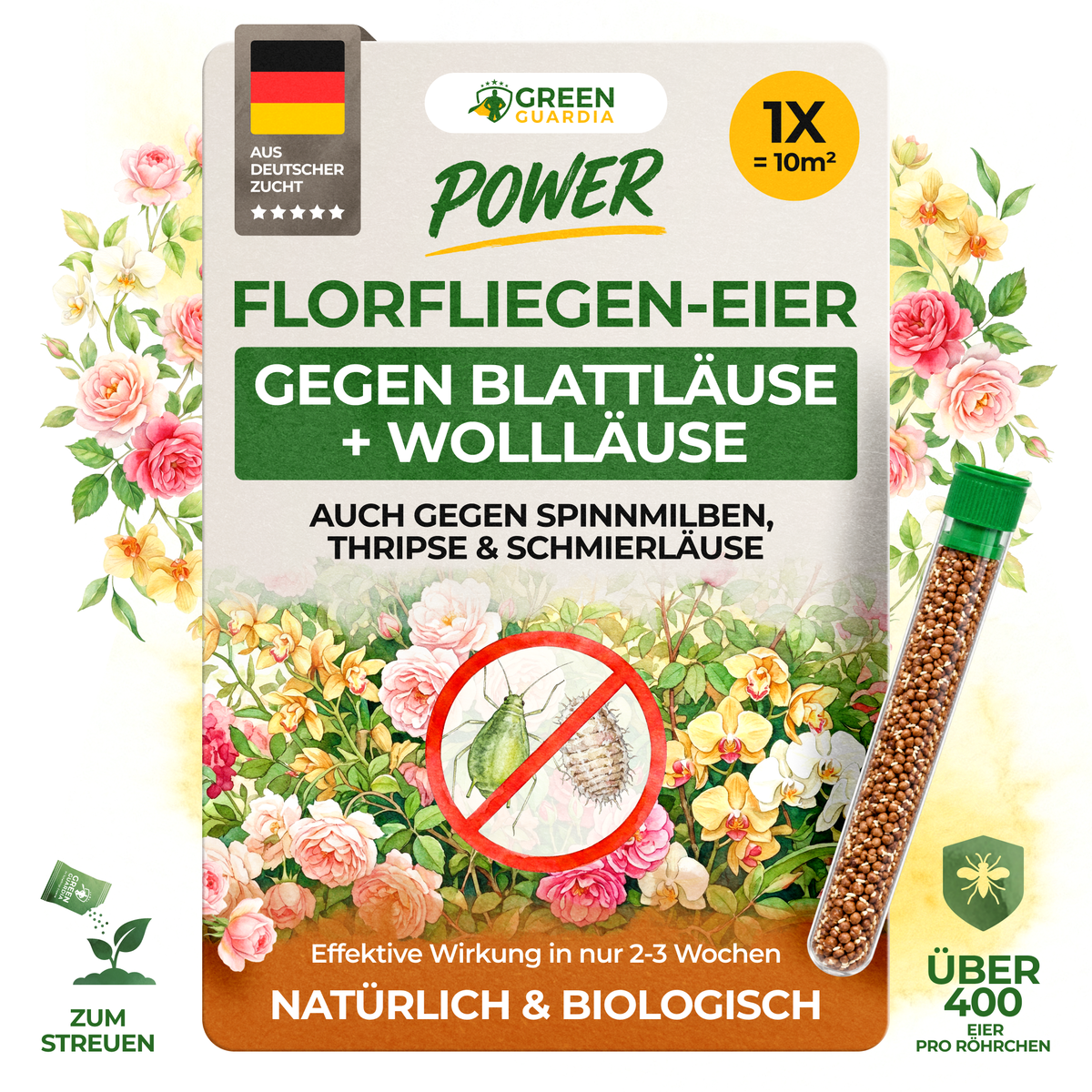
Gaasvliegeitjes tegen bladluizen, tripsen, spint en meer.
-
100% natural help against aphids & co.
-
Bred in Germany – fast delivery
-
Completely chemical-free – no residues
-
Discreet, effective & biologically sustainable
-
Safe for children & pets
Aantal buisjes
In stock - With you in 2-4 business days


Was unsere Kund*innen sagen
-
Wirksamkeit
nicht wirksam sehr wirksam -
Anwendung
kompliziert kinderleicht -
Verträglichkeit
bedenklich sehr sicher
Lieferoption wählen & clever sparen:


opties kiezen
-
100% natural help against aphids & co.
-
Bred in Germany – fast delivery
-
Completely chemical-free – no residues
-
Discreet, effective & biologically sustainable
-
Safe for children & pets
Aantal buisjes
In stock - With you in 2-4 business days
Lieferoption wählen & clever sparen:
-
100% natural help against aphids & co.
-
Bred in Germany – fast delivery
-
Completely chemical-free – no residues
-
Discreet, effective & biologically sustainable
-
Safe for children & pets
Aantal buisjes
In stock - With you in 2-4 business days
Lieferoption wählen & clever sparen:
Groene gaasvliegeitjes tegen bladluizen – natuurlijke hulp voor maximaal 10 m²
De GREEN GUARDIA eitjes van de groene gaasvlieg (Chrysoperla carnea) bieden een natuurlijke en chemievrije manier om bladluizen en andere zachtchalige plagen te bestrijden. De gaasvliegeitjes worden geleverd in een handig buisje en kunnen gericht op de aangetaste planten worden uitgezet.
Elk buisje bevat meer dan 400 gaasvliegeitjes en is voldoende voor een oppervlakte van maximaal 10 m². Na het uitzetten ontwikkelen de eitjes zich direct ter plaatse. De jonge gaasvlieglarven komen vervolgens op de planten uit en gaan op zoek naar geschikte prooien.
Waarom eitjes van de groene gaasvlieg?
Uit de eitjes van Chrysoperla carnea komen gaasvlieglarven die vanwege hun enorme eetlust ook wel "bladluisleeuwen" worden genoemd. Tijdens hun ontwikkeling verorberen de larven talloze kleine, zachtchalige plaaginsecten. Door de eitjes uit te zetten, kunnen de nuttige insecten zich direct op de plek van infectie ontwikkelen.
- Meer dan 400 eitjes per buisje: Een groot aantal gaasvliegeitjes voor gerichte toepassing op maximaal 10 m².
- Ontwikkeling ter plaatse: De eitjes worden op de planten uitgezet, zodat de larven direct op de plek zelf uitkomen en zich daar ontwikkelen.
- Actieve natuurlijke vijanden: Na het uitkomen gaan de jonge larven op zoek naar geschikte prooien.
- Veelzijdig inzetbaar: Geschikt tegen bladluizen en andere kleine, zachtchalige plagen en hun ontwikkelingsstadia.
- Geschikt voor vele planten: Te gebruiken op groenten, kruiden, sierplanten en kamerplanten.
- Natuurlijke plaagbestrijding: Ondersteunt de beheersing van plagen zonder chemische resten.
Voordelen op een rij
- Meer dan 400 eitjes van de groene gaasvlieg per buisje
- Voldoende voor een oppervlakte van maximaal 10 m²
- Gaasvlieglarven komen uit en ontwikkelen zich direct op de plaats van inzet
- Natuurlijke ondersteuning bij bladluisinfecties
- Chemievrije toepassing zonder residu
- Geschikt voor binnenshuis, kassen, balkons en beschutte buitenruimtes
- Eenvoudige en gerichte verspreiding over de aangetaste planten
Hoe gebruik je de gaasvliegeitjes correct?
- Snel uitzetten: Gebruik de gaasvliegeitjes zo snel mogelijk na ontvangst.
- Buisje voorzichtig openen: Verdeel de inhoud voorzichtig en zo gelijkmatig mogelijk over het beoogde gebied.
- Houd rekening met infectiehaarden: Breng de eitjes bij voorkeur aan in de buurt van aangetaste planten, zodat de larven na het uitkomen hun prooi snel kunnen bereiken.
- Afwachten: Na het uitzetten ontwikkelen de eitjes zich ter plaatse. Vervolgens komen de jonge larven uit en beginnen ze met hun zoektocht naar voedsel.
- Creëer geschikte omstandigheden: Gematigde tot warme temperaturen zijn het meest geschikt voor de ontwikkeling van de nuttige insecten.
- Vermijd direct zonlicht: Zet de eitjes bij voorkeur 's ochtends of 's avonds uit en bescherm ze tegen intensief direct zonlicht.
- Gebruik geen schadelijke gewasbeschermingsmiddelen: Vermijd tijdens de inzet van nuttige insecten middelen die schadelijk kunnen zijn voor gaasvliegeitjes of -larven.
- Controleer op mieren: Mieren kunnen bladluizen beschermen en daardoor de natuurlijke plaagbestrijding verstoren.
Toepassingsgebieden voor GREEN GUARDIA groene gaasvliegeitjes
- Kamerplanten: Natuurlijke plaagbestrijding in woningen en kantoren
- Kas & serre: Geschikt voor groenten, kruiden en sierplanten
- Balkon & terras: Voor pot- en kuipplanten op beschutte plekken
- Moestuinbak & tuin: Voor de gerichte behandeling van aangetaste plantvakken
- Gevoelige gewassen: Natuurlijk alternatief voor chemische plaagbestrijding
🌿 Tip: Het effect is niet direct zichtbaar na het uitzetten, omdat de eitjes zich eerst moeten ontwikkelen en de larven moeten uitkomen. Zodra ze zijn uitgekomen, worden de jonge larven actief en gaan ze op zoek naar bladluizen en andere prooien. Controleer de planten regelmatig en herhaal de behandeling indien nodig bij een sterke of terugkerende infectie.
Anwendung der GREEN GUARDIA Grünen Florfliegeneier
Die Eier der Grünen Florfliege (Chrysoperla carnea) von GREEN GUARDIA sind einfach anzuwenden und eignen sich für Zimmerpflanzen, Balkonpflanzen, Gewächshäuser, Wintergärten und geschützte Gartenbereiche. Die Florfliegeneier werden im praktischen Röhrchen geliefert und sollten möglichst zeitnah nach Erhalt an den befallenen Pflanzen ausgebracht werden.
Nach der Ausbringung entwickeln sich die Florfliegeneier direkt am Einsatzort weiter. In den kommenden Tagen schlüpfen daraus die jungen Florfliegenlarven, die anschließend selbstständig mit der Suche nach Blattläusen und anderen kleinen, weichhäutigen Schädlingen beginnen. Aufgrund ihres ausgeprägten Appetits werden die Larven auch als „Blattlauslöwen“ bezeichnet.
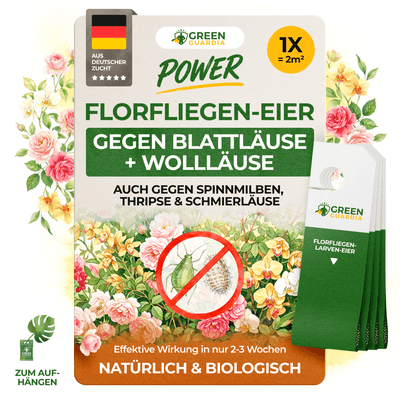
Ein Röhrchen enthält über 400 Eier der Grünen Florfliege und reicht für eine Pflanzenfläche von bis zu 10 m².
🐣 Wann schlüpfen die Florfliegen?
Die Schlupfdauer ist abhängig von der Umgebungstemperatur. Bei etwa
15 °C dauert der Schlupf ungefähr 5–7 Tage.
Bei etwa 20 °C können die ersten Florfliegenlarven bereits nach
2–3 Tagen schlüpfen.
Wichtig: Da es sich um lebende Nützlinge in unterschiedlichen Entwicklungsstadien handelt, kann die Entwicklung bereits während des Transports fortschreiten. Es ist daher vollkommen normal, wenn bei der Ankunft bereits einige Florfliegenlarven geschlüpft sind. In diesem Fall sollte der Inhalt des Röhrchens ebenfalls möglichst zeitnah an den vorgesehenen Pflanzen ausgebracht werden.
Schritt-für-Schritt-Anleitung
- Zeitnah ausbringen: Das Röhrchen nach Erhalt vorsichtig öffnen und den Inhalt möglichst zeitnah an den befallenen Pflanzen verteilen.
- Gezielt verteilen: Die Florfliegeneier behutsam auf die Pflanzen und insbesondere in der Nähe von Blattlauskolonien und anderen Befallsstellen ausbringen. So haben die jungen Larven nach dem Schlupf kurze Wege zu ihrer Beute.
- Bereits geschlüpfte Larven mit ausbringen: Sollten während des Transports bereits einzelne Florfliegenlarven geschlüpft sein, ist dies ein natürlicher Teil der Entwicklung. Diese zusammen mit dem übrigen Inhalt vorsichtig an den Pflanzen verteilen.
- Schlupfzeit beachten: Die Entwicklung ist temperaturabhängig. Bei etwa 15 °C dauert der Schlupf ungefähr 5–7 Tage, während die Larven bei etwa 20 °C bereits nach ungefähr 2–3 Tagen schlüpfen können.
- Geeigneten Zeitpunkt wählen: Die Ausbringung vorzugsweise morgens oder abends durchführen und starke direkte Sonneneinstrahlung vermeiden.
- Passende Bedingungen schaffen: Gemäßigte Temperaturen und eine geeignete Luftfeuchtigkeit unterstützen die Entwicklung und Aktivität der Nützlinge. Extreme Hitze, Kälte und Zugluft sollten vermieden werden.
- Keine unverträglichen Mittel verwenden: Vor und während des Nützlingseinsatzes auf unverträgliche chemische Pflanzenschutzmittel verzichten. Nach einer vorherigen Behandlung müssen die jeweiligen Wartezeiten des verwendeten Mittels beachtet werden.
- Ameisen kontrollieren: Ameisen können Blattläuse beschützen und dadurch die Arbeit der später schlüpfenden Florfliegenlarven beeinträchtigen. Vorhandene Ameisen sollten daher möglichst von den Pflanzen ferngehalten werden.
- Pflanzen regelmäßig prüfen: Die Entwicklung des Schädlingsbefalls und den Schlupf der Nützlinge in den folgenden Tagen beobachten. Nach dem Schlupf beginnen die jungen Florfliegenlarven mit der Suche nach geeigneten Beutetieren.
🌿 Tipp: Nicht wundern, wenn bei der Ankunft bereits einzelne Larven im Röhrchen zu sehen sind – je nach Temperatur kann der Schlupf bereits während des Transports beginnen. Bringe den gesamten Inhalt des Röhrchens möglichst zeitnah an den befallenen Pflanzen aus. Bei starkem oder erneut auftretendem Schädlingsbefall kann eine weitere Anwendung sinnvoll sein.
Blattläuse, Wollläuse, Thripse & Spinnmilben natürlich bekämpfen – mit GREEN GUARDIA Florfliegenlarven
Blattläuse, Wollläuse, Thripse und Spinnmilben zählen zu den häufigsten und lästigsten Pflanzenschädlingen im Garten, Gewächshaus oder an Zimmerpflanzen. Sie saugen Pflanzensäfte, schwächen das Wachstum und übertragen häufig Krankheiten.
Mit GREEN GUARDIA Florfliegen bekämpfst du diese Schädlinge gezielt und effektiv – 100 % natürlich, rückstandsfrei und ohne Chemie.
Was macht diese Schädlinge so gefährlich?
- Blattläuse: Vermehren sich rasant und übertragen Pflanzenviren.
- Wollläuse: Verstecken sich in Blattansätzen und hinterlassen klebrigen Honigtau.
- Thripse: Saugen an Blättern und Knospen – oft sichtbar durch silbrige Flecken.
- Spinnmilben: Bilden feine Gespinste und verursachen Blattverfärbungen und Blattabwurf.
So beugst du einem Befall vor
- Regelmäßig kontrollieren: Blätter, Blattunterseiten und Triebe frühzeitig prüfen.
- Pflanzen stärken: Gesunde Pflanzen sind weniger anfällig – achte auf Nährstoffe und Bodenqualität.
- Luftzirkulation verbessern: Besonders wichtig in Innenräumen und Gewächshäusern.
- Biologische Nützlinge einsetzen: Florfliegenlarven und Raubmilben ergänzen sich ideal.
🌱 Tipp: Die beste Wirkung erzielst du bei Temperaturen ab 12 °C. Bei starkem Befall empfiehlt sich die Kombination mit Florfliegenlarven oder Raubmilben für maximale Ergebnisse.

GREEN GUARDIA vs. Other providers
What sets us apart from the rest

|

|

Produkte für Haus, Garten & tiernahe Bereiche |

Unklare Produktinfos |

Nützlinge aus deutscher Zucht |
Unklare Herkunftsangaben |

Praxisnah entwickelt |
Komplizierte Auswahl |

Klare Anwendungshinweise |
Wenig Anwendungshinweise |

Frisch abgefüllt bzw. sorgfältig verpackt |
Längere Lager- oder Lieferzeiten möglich |

German breeding
Beneficial insects from controlled German breeding – quality you can rely on.

Expert advice
Application tips and support from our experts – targeted and effective.

Fast help
Our beneficial insects are ready to use immediately and help specifically with acute infestations in the house or garden.

Natural & safe
Safe for everyday use – completely risk-free for children, pets & plants.


We let our customers do the talking.

Natural pest control
At GREEN GUARDIA you will find the right natural solution for every pest problem – completely without chemicals.
Whether lacewing larvae against aphids, predatory mites against spider mites, or nematodes against fungus gnats and slugs – our beneficial insects provide reliable help in the house, garden, or greenhouse.
As a specialist in biological pest control, we stand for quality, innovation, and sustainable effectiveness – in harmony with nature, humans, and animals.

Expert advice – Personal & practical
Our expert advisors support you with targeted application tips and many years of experience in natural pest control. Whether you have questions about application, combining different beneficial insects, or selecting the right product – we are here to help you quickly and competently.
FAQ Lacewings
Do you have questions about our products, their application, or shipping? Here you will find the most important answers at a glance. If anything remains unclear, please feel free to contact us!

Lacewing larvae, also known as "aphid lions," are natural predators of aphids, mealybugs, thrips, and other pests. They feed exclusively on these pests and reduce the infestation naturally.
Depending on the variant chosen, our products contain either lacewing eggs on cards, loose lacewing eggs in a bag, or already hatched lacewing larvae in a practical cardboard honeycomb. All variants are designed for easy and targeted application of the beneficial insects.
Yes, lacewing larvae are completely harmless to humans, pets, and plants. They leave no residues and disappear once their work is done.
Lacewing larvae are suitable for the natural control of aphids, mealybugs, scale insects, thrips, and spider mites.
The hatched larvae are only 1–2 mm long and often hide on the undersides of leaves. Their activity is usually only visible through the reduction of pests.
Depending on temperature and humidity, the larvae hatch within 1 to 5 days and remain active for about 2–4 weeks.
Depending on the chosen variant, you will receive lacewing eggs on cards, loose lacewing eggs in a bag, or lacewing larvae in a practical cardboard honeycomb.
No – they contain eggs in various stages of development. The larvae will hatch in the following days.
Best applied at the first signs of pest infestation – this allows the beneficial insects to intervene early.
Ideally, use them immediately. Short-term storage for 1–2 days at 8–12°C is possible.
Shipping information:
- Fresh shipping: Orders placed between Monday and Friday 5:00 AM are shipped fresh daily.
- Weekend orders: Orders placed after Friday 5:00 AM will be shipped the following Monday to guarantee the freshest beneficial insects.
One card is sufficient for up to 2 m² of plant area. Use multiple cards for heavier infestations or larger areas.
The lacewing eggs or larvae are applied directly near the affected plants. Cards can simply be hung up or laid between the plants. The bag can be opened at the perforation – then the eggs can be hung up directly or carefully sprinkled. Carefully shake out the lacewing larvae from the cardboard honeycomb into the affected area. For best results, apply as early as possible and avoid using chemical agents.
At 15°C after approx. 5–7 days, at 20°C already after 2–3 days.
Leave them in place for at least 2-3 weeks so all larvae can hatch and become active.
In case of severe or recurring infestation, a second application after 2–3 weeks is recommended.
Yes – e.g., on a balcony, terrace, or in the garden. However, direct sunlight and heavy rain should be avoided.
No – the cards are ready to use. Simply place them, and hatching occurs automatically. Please open the bags at the perforation.
The freshly hatched larvae are barely visible to the naked eye. They start hunting pests immediately after hatching and only become more clearly visible later.
As early as after 5–10 days, depending on temperature, plant type, and pest density.
Yes – ideal for indoor areas, conservatories, or greenhouses.
Yes – lacewings can be combined well with parasitic wasps or predatory mites.
The larvae eat the pests, pupate later, or disappear on their own – completely without residues.
Yes – they are mostly made of biodegradable material and can be disposed of in organic waste.


