





























Australian Spider Beetle: Stored Product Pest in Herbs, Spices & Dry Goods
The Australian Spider Beetle (Ptinus fur) is a small spider beetle that feeds on dry plant materials and occasionally animal-based materials. In households, it is primarily known as a stored product and material pest – e.g., in dried herbs, spices, tea, or grain products. Here you can find out how to identify it and how to take natural, sustainable countermeasures.
What is the Australian Spider Beetle?
The Australian Spider Beetle is a very small beetle (usually just a few millimeters) that is often found in human environments. It is frequently nocturnal and therefore often goes unnoticed for a long time. These creatures use dry stores as food – it becomes particularly critical when larvae are present in hidden corners and packaging.
How to identify the Australian Spider Beetle & infestation
- Beetle: Very small, brownish to dark, with noticeably long legs/antennae
- Locations: Pantry, drawers, cracks, under/behind cans
- Signs in food stores: Crumbs/dust, contaminated dry goods, possibly larval skins
- Typical: Recurring findings despite "just cleaning" (because hiding spots remain)
Which products are frequently affected?
- Dried herbs & spices (e.g., paprika, pepper, spice blends)
- Tea, cocoa, dry goods
- Grain, flour, semolina, muesli, rice
- Pet food/bird seed
Why does an infestation occur?
- Introduced via previously infested dry goods or packaging
- Long storage times (rarely used products)
- Packaging that is not airtight
- Cracks/crevices as secure hiding places for larvae
What to do in case of an infestation? (natural & sensible)
1. Isolate the infestation
- Systematically check all dry goods (including the "back" of the cupboard)
- Isolate and discard affected products
- Document where they were found (where is the infestation strongest?)
2. Clean cupboards thoroughly
- Empty the cupboard completely
- Vacuum corners, drill holes, tracks, and crevices thoroughly
- Wipe with a damp cloth and allow to dry well
3. Store supplies correctly
- Use only airtight containers (glass/metal)
- Keep storage times short, regularly rotate stock
- Never store pet food in open containers
Recommendation for Beneficial Insects: Parasitic Wasps
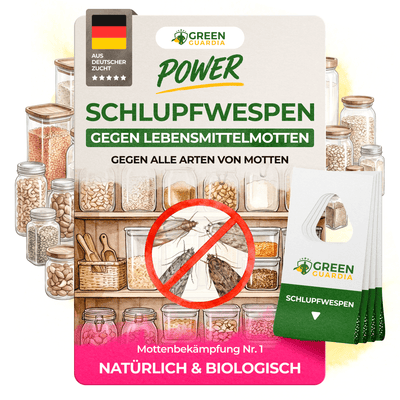
For natural support with stored product beetle problems, Lariophagus distinguendus (a type of parasitic wasp) are well-suited. They parasitize beetle larvae in hard-to-reach areas (e.g., crevices/packaging remnants) and help to interrupt the development cycle – especially if you cannot locate the source with 100% certainty.
FAQ about the Australian Spider Beetle
Is the Australian spider beetle dangerous?
It is primarily considered a stored product and material pest. You should no longer use affected food, but the focus remains on hygiene and storage.
Why do I keep finding individual beetles even though I have cleaned?
Larvae or hiding spots often remain in crevices, drill holes, or packaging residue. Therefore, thorough vacuuming and using airtight containers are crucial.
How can I prevent this effectively?
Decant dry goods into glass/metal containers, keep storage times short, check regularly – and keep an eye on spices, tea, and pet food in particular.
What is the most important first step?
Find the source (which product?), remove infested goods, and clean the cupboard including all crevices thoroughly. After that, store goods in airtight containers consistently.