




























































Pantry Moths in the Bedroom: Causes and Solutions
Finding a pantry moth in the bedroom might seem completely illogical at first – after all, there are no open bags of flour or muesli there. Yet it happens surprisingly often: moths are attracted to light sources, fly out of the kitchen, or make their way into bedrooms through doors, hallways, and cracks. The most important thing now is: don't just “get rid of” the moth, but rather find the root cause and reliably stop the infestation.
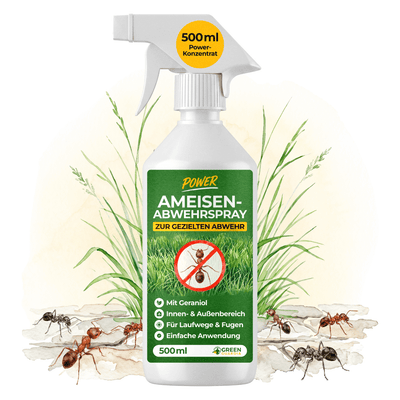
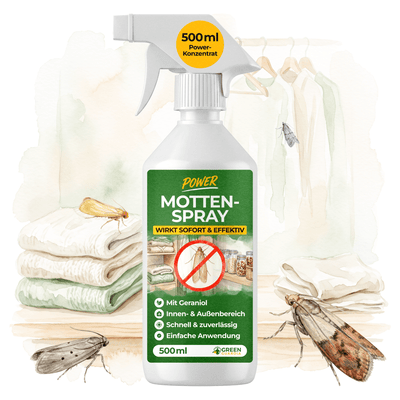
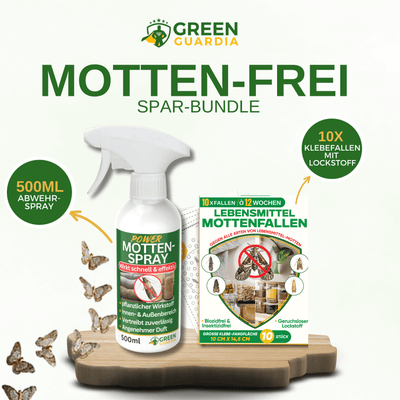
To get clarity quickly, monitoring is a strong first step: Pantry Moth Traps (10-piece value pack) will show you if there is genuinely pantry moth activity in your home – and whether the focus is in the kitchen/pantry or another area. If you also want to break the moth breeding cycle, parasitic wasps against pantry moths can be a useful addition. For rooms like bedrooms, where you prefer to avoid strong odors, targeted action with a suitable product such as the Moth Repellent Spray Power Concentrate can also be helpful – especially along pathways, in cracks, or at typical “contact points” (e.g., back of the closet, baseboards).
Causes: Why do pantry moths appear in the bedroom?
Pantry moths do not live “in the bed” – but they can show up in the bedroom if they spread from the actual source of the infestation or are attracted by light. Often, it's very simple routes that are overlooked in everyday life.
- Light & Orientation: Moths fly toward light sources in the evening and end up in the bedroom this way.
- Spread from the kitchen: The infestation is usually in stored food – the adult moths then fly into other rooms.
- Supplies outside the kitchen: Snacks, pet food, tea, nuts, or sweets stored in drawers/dressers in the bedroom.
- Hidden breeding grounds: Cracks, moldings, drill holes, boxes, cartons, or rarely used cabinets.
- Confusion: Sometimes it is not pantry moths, but clothes moths – the approach is different in that case.
🐞 Tip: If you are unsure whether they are really pantry moths, start with monitoring: Place a Pantry Moth Trap near the suspected source (kitchen/pantry) and one in the transition area (hallway) – this way, you can quickly identify the direction.
Detection: How to reliably identify pantry moths
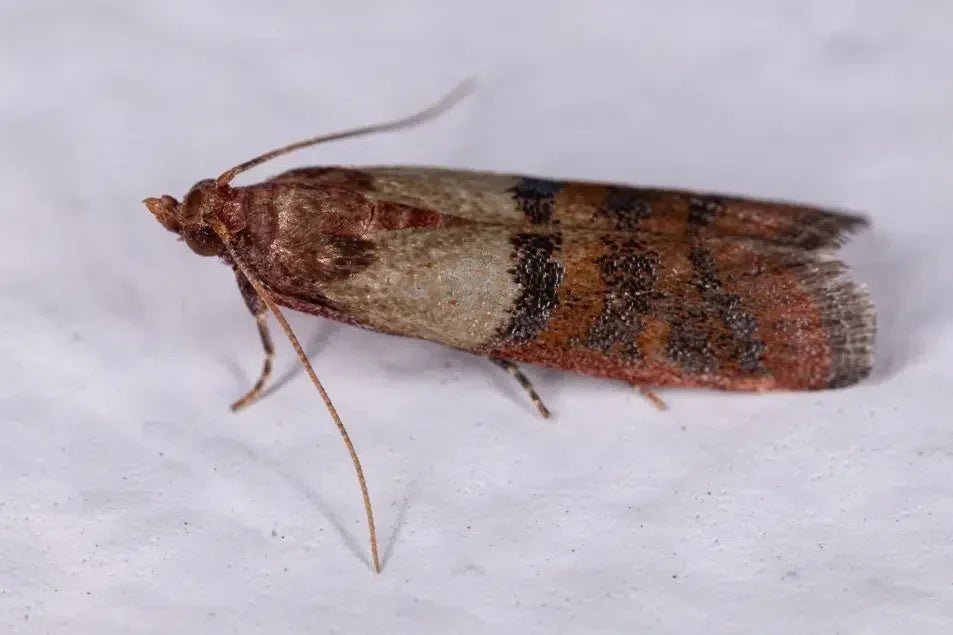
Distinguishing them is crucial: pantry moths typically appear where dry food is stored. Clothes moths tend to be found on textiles, carpets, or in the closet. If moths are flying in the bedroom, it doesn't automatically mean the infestation is there – but it is a warning sign.
- Pantry moths: commonly active in the kitchen/pantry, infestation in flour, muesli, nuts, dried fruit, pet food
- Typical traces: fine webbing, larvae, clumps/“threads” in packaging or on lids
- Monitoring creates clarity: Traps show whether the moths are active and where the activity is highest
For quick confirmation, Pantry Moth Traps (10-piece value pack) are ideal because you can check several zones in parallel: kitchen, hallway, bedroom (by the window), and utility room if applicable.
Control: What you should do now
When pantry moths appear in the bedroom, the best approach follows the principle: find the source → clean thoroughly → monitor activity → interrupt the breeding cycle. This prevents you from just fighting the “symptoms.”
1) Check the source of the infestation – even outside the kitchen
- Check all dry goods: flour, muesli, rice, nuts, tea, dried fruit, baking ingredients, pet food
- Also check “forgotten” supplies: drawers, dressers, boxes, snack supplies in the bedroom
- Consistently dispose of infested items and take them outside immediately
2) Cleaning: Don't forget cracks, moldings, and typical hiding places
- Vacuum cabinets, baseboards, window areas, and corners thoroughly (a brush attachment helps)
- Wipe surfaces with a damp cloth, especially cabinet edges & transitions
- Empty or wash out vacuum cleaner bags/containers directly
3) Combine monitoring + targeted measures
To ensure you aren't working “in the dark,” monitoring is the game-changer: with Pantry Moth Traps , you can see if the moth activity is subsiding – or if you have overlooked a hidden source.
- Traps for control: Place traps in the kitchen/pantry and additionally in the hallway or near the bedroom to detect movement. (Value pack is particularly practical for this.)
- Parasitic wasps as a supplement against the brood: Parasitic wasps against pantry moths can help to interrupt the moth life cycle – especially if you suspect there is still a brood in cracks/drill holes.
- Targeted application on pathways & contact points: In areas like baseboards, backs of cabinets, or transitions, a product like the Moth Repellent Spray Power Concentrate can be a supplementary solution – especially if you repeatedly see individual moths in the bedroom.
🐞 Tip: If traps in the kitchen catch significantly more than in the bedroom, the cause is almost always in the storage area. Then it is worth cleaning there particularly thoroughly and additionally using parasitic wasps to interrupt the cycle.
Prevention: How to prevent moths in living rooms and bedrooms
Moth problems often return slowly if supplies continue to be stored in thin bags or cardboard boxes, or if “a little corner” is never checked. With a few habits, you make it much harder for moths.
- Decant supplies: Glass or metal instead of cardboard/bags, especially for flour, muesli, nuts, pet food
- Regular quick checks: Cabinet gaps, rarely used drawers, storage boxes
- Early warning system: Occasionally use moth traps if problems recur
- Keep transitions clean: Hallway, door frames, window areas, and baseboards
FAQ about Pantry Moths in the Bedroom
Why do pantry moths fly into the bedroom at all?
Moths are often attracted by light or fly out of the kitchen/pantry. This does not automatically mean the infestation is in the bedroom – the source is often in the pantry cupboard. With moth traps, you can compare the activity in different rooms.
How do I find out if they are pantry moths or clothes moths?
Pantry moths are usually related to stored food (flour, muesli, nuts, pet food) and often leave webbing on packaging. Clothes moths tend to be found on textiles, carpets, or in the closet. If you place traps in the kitchen and bedroom, you will quickly get clues about where the activity is actually coming from.
Is seeing one moth enough for an infestation?
A single moth can be a random find – but if you repeatedly see moths, it is a clear sign. Then monitoring with pantry moth traps is worth it to accurately assess the situation.
How do parasitic wasps help with pantry moths?
Parasitic wasps against pantry moths can be a supplementary measure to interrupt the moth life cycle – especially if you suspect that a brood still exists in cracks or hard-to-reach places. In combination with traps, you can see if the activity is decreasing.
What can I do if I keep seeing individual moths in the bedroom?
First check the storage source (also snacks, pet food, or tea in drawers), clean thoroughly, and use traps for monitoring. In addition, targeted application at contact points and pathways can be useful – e.g., with the Moth Repellent Spray Power Concentrate.
Take action now:
If you discover pantry moths in the bedroom, first ensure clarity: Use Pantry Moth Traps (10-piece value pack) as an early warning system and for control in multiple rooms. If you also want to interrupt the moth breeding cycle, supplement this with parasitic wasps against pantry moths . And if you repeatedly notice moths on pathways or typical contact points, the Moth Repellent Spray Power Concentrate can be a practical addition.