







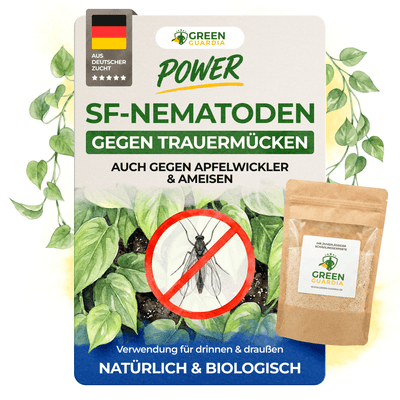
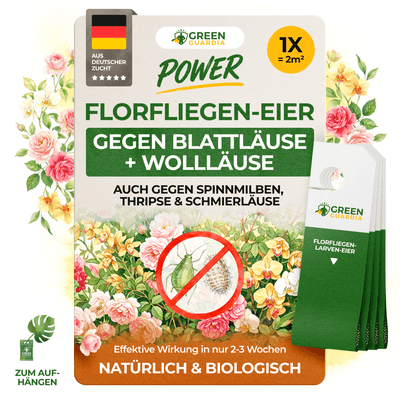




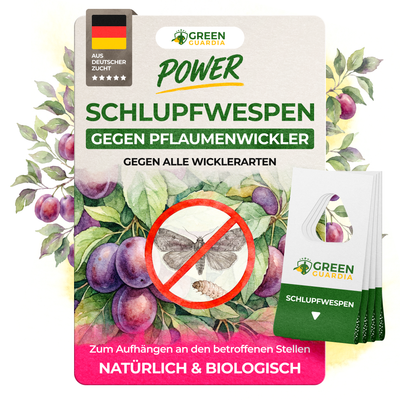




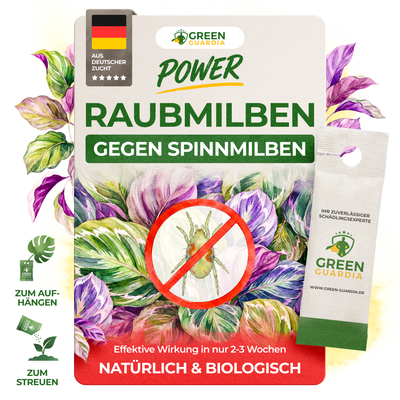























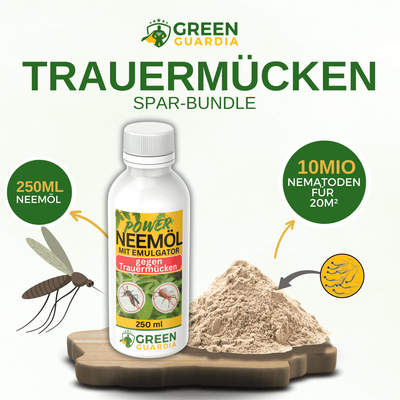


Number of beneficial insects and m²


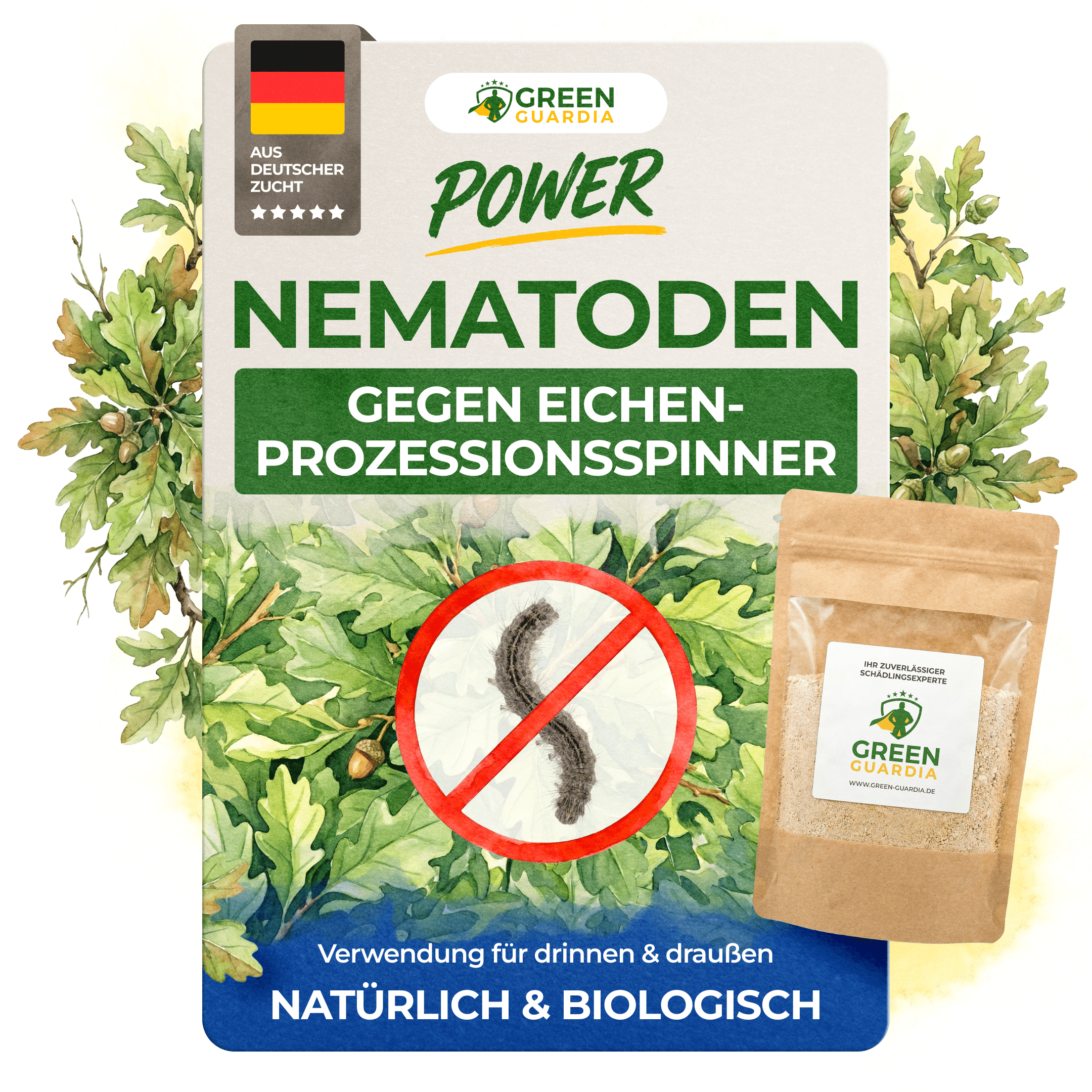
Nematodes against oak processionary moths
-
100% natural help against oak processionary moths
-
From German breeding – fast delivery
-
Completely chemical-free – no residues
-
Discreet, effective & biologically sustainable
-
Safe for children & pets
Number of beneficial insects and m²
In stock - with you in 2-4 business days


What our customers say
-
Efficacy
hardly any effect partially effective highly effective -
Application
complicated some effort child's play -
Delivery Quality
not vital usable fresh & active
Choose delivery option & save cleverly:


Choose options
-
100% natural help against oak processionary moths
-
From German breeding – fast delivery
-
Completely chemical-free – no residues
-
Discreet, effective & biologically sustainable
-
Safe for children & pets
Number of beneficial insects and m²
In stock - with you in 2-4 business days
Choose delivery option & save cleverly:
-
100% natural help against oak processionary moths
-
From German breeding – fast delivery
-
Completely chemical-free – no residues
-
Discreet, effective & biologically sustainable
-
Safe for children & pets
Number of beneficial insects and m²
In stock - with you in 2-4 business days
Choose delivery option & save cleverly:
Nematodes against oak processionary moths
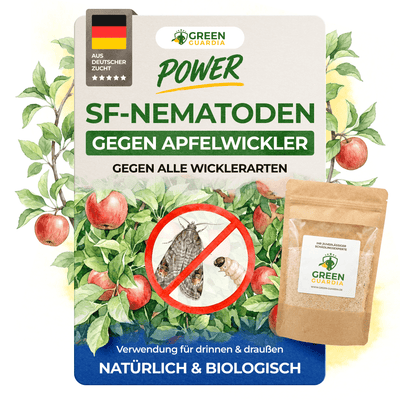
Nematodes against oak processionary moths are microscopic threadworms that are applied to infested oak trees with water. They specifically seek out the caterpillars, supporting biological pest control without the use of chemical insecticides.
Combating oak processionary moths: why timing is everything
The oak processionary moth is a butterfly whose caterpillars live exclusively on oak trees. As long as they are small, they are relatively easy to treat. The situation changes from the third larval stage onwards: they then develop fine stinging hairs that are spread by the wind and pose a health risk to humans and animals. If you want to combat oak processionary moths, you should therefore check your oak trees regularly from spring onwards – the first caterpillars and webs on the trunk or on thicker branches are a signal to act now, not later.
Nematodes against oak processionary moths on oak trees, paths, and playgrounds
The application is suitable for all oak locations where people need to be protected – from trees in private gardens to parks, school playgrounds, and forest areas.
What the threadworms do on the oak tree
Nematodes are tiny. They are invisible to the naked eye in water. After application, they spread across the treated areas and specifically seek out the caterpillars. The application does not require chemical insecticides, making it a natural alternative for maintaining green spaces and tree populations. To ensure the beneficial insects work optimally, it is best to spray them in the evening or during damp weather. It is only important that they do not dry out and that the caterpillars are still young.
What you should clarify before treatment
Keep two things in mind. Firstly, protection. Caterpillars and webs must never be touched without suitable protective equipment due to the stinging hairs – this also applies to old, abandoned nests. Secondly, accessibility: the solution must reach the places where the caterpillars are located. This is feasible on a low tree in your own garden, but not easily done on a fully grown oak tree over a playground. In case of doubt, it is worth calling the local authority or a specialist company before climbing a ladder yourself. In addition to nematodes, you can also find other equipment for biological plant protection in one place at GREEN GUARDIA.
When nematodes alone are not enough
The most important point first: stinging hairs that are already in the air, in the grass, or in old nests do not disappear as a result of treatment. They remain irritating for a long time, and old webs must be professionally removed – the application does not replace this. The solution also does not reach the moths themselves; it works where the caterpillars are. In dry conditions and bright sunshine, conditions are unfavorable, so apply in the evening or in damp weather. Anyone using plant protection products in parallel should check whether these affect the beneficial insects.
🌿 Conclusion: GREEN GUARDIA nematodes are a natural and sustainable solution for the biological control of oak processionary moths and are suitable for gardens, parks, and other areas with oak trees.
Being early pays off twice here: order nematodes now!
Anwendung & Tipps: So nutzt du die Nematoden richtig
- Anmischen: Die Nematoden gemäß Anleitung in der empfohlenen Wassermenge auflösen.
- Ausbringen: Die Lösung gleichmäßig auf die befallenen Bereiche ausbringen.
- Witterung: Geeignete Witterungsbedingungen beachten, bevorzugt feuchtes Wetter oder die Abendstunden.
- Vor Austrocknung schützen: Die behandelten Bereiche nicht austrocknen lassen.
- Zeitpunkt: Frühzeitig während der Raupenentwicklung anwenden, solange die Raupen jung sind.
- Keine ungeeigneten Pflanzenschutzmittel: Auf gleichzeitig eingesetzte Mittel achten, die die Nützlinge beeinträchtigen könnten.
Geeignete Einsatzbereiche
- Eichen im Garten: Biologische Anwendung im privaten Grünbereich.
- Parks & Grünanlagen: Für öffentliche und gewerbliche Grünflächen.
- Wege & Aufenthaltsbereiche: Regelmäßige Befallsorte, an denen Menschen sich aufhalten.
- Schulhöfe & Spielplatznähe: Natürliche Anwendung ohne Chemikalien.
- Forst- & Landschaftsbereiche: Teil nachhaltiger Pflegekonzepte.
Was ist der Eichenprozessionsspinner?
Der Eichenprozessionsspinner ist ein Schmetterling, dessen Raupen ausschließlich an Eichen leben. Besonders ab dem dritten Larvenstadium bilden sie feine Brennhaare aus, die Hautreizungen, Juckreiz oder allergische Reaktionen verursachen können. Gleichzeitig führen die Raupen durch ihren Blattfraß zu einer starken Belastung der betroffenen Eichen.
- Fraßschäden: Die Raupen fressen Blätter und können Eichen bei starkem Befall erheblich schwächen.
- Brennhaare: Die feinen Haare können durch den Wind verbreitet werden und stellen ein Gesundheitsrisiko für Menschen und Tiere dar.
- Raupennester: Gespinste befinden sich häufig am Stamm oder an stärkeren Ästen und dienen den Raupen als Rückzugsort.
Wie beuge ich einem Befall vor?
- Eichen regelmäßig kontrollieren: Besonders im Frühjahr auf erste Raupen und Gespinste achten.
- Frühzeitig handeln: Je jünger die Raupen sind, desto einfacher ist eine biologische Behandlung.
- Direkten Kontakt vermeiden: Raupen und Gespinste wegen der Brennhaare niemals ohne geeignete Schutzausrüstung berühren.
- Nützlinge fördern: Natürliche Gegenspieler wie verschiedene Vogelarten können zur natürlichen Regulierung beitragen.
- GREEN GUARDIA Nematoden einsetzen: Die mikroskopisch kleinen Nützlinge werden mit Wasser ausgebracht, suchen die Raupen gezielt auf und unterstützen eine biologische Regulierung – ohne chemische Insektizide.
🌿 Tipp: Die Anwendung erfolgt idealerweise im frühen Raupenstadium sowie bei feuchter Witterung oder in den Abendstunden. So finden die Nematoden optimale Bedingungen für ihre natürliche Aktivität.

GREEN GUARDIA vs. Other providers
What sets us apart from the others

|

|

Products for home, garden & pet-related areas |

Unclear product information |

Beneficial insects from German breeding |
Unclear origin information |

Developed for practical use |
Complicated selection |

Clear application instructions |
Few application instructions |

Freshly bottled or carefully packaged |
Longer storage or delivery times possible |

German breeding
Beneficial insects from controlled German breeding – quality you can rely on

Expert advice
Application tips and support from our experts – targeted and effective.

Fast help
Our beneficial insects are ready for immediate use and provide targeted help for acute infestations in the house or garden.

Natural & safe
Safe for everyday use – application is completely risk-free for children, pets & plants.


We let our customers speak.

Natural pest control
At GREEN GUARDIA you will find the right natural solution for every pest problem – completely without chemicals.
Whether parasitic wasps against moths, predatory mites against spider mites, or nematodes against fungus gnats and slugs – our beneficial insects provide reliable help in the house, garden, or greenhouse.
As a specialist in biological pest control, we stand for quality, innovation, and sustainable impact – in harmony with nature, people, and animals.

Expert advice – Personal & Practical
Our expert advisors support you with targeted application tips and years of experience in natural pest control. Whether you have questions about application, combining different beneficial insects, or selecting the right product – we will help you quickly and competently.
FAQ Nematodes
Do you have questions about our products, their application, or shipping? Here you will find the most important answers at a glance. If anything remains unclear, please feel free to contact us!

Nematodes are microscopic roundworms that biologically target and control soil-dwelling pests such as fungus gnat larvae, vine weevils, or chafer grubs.
Depending on the species, nematodes combat fungus gnat larvae, vine weevils, chafer grubs, mole crickets, garden chafer larvae, ants, flea beetles, slugs, or crane fly larvae, among others.
No, nematodes are completely harmless to humans, pets, and plants. They specialize in specific pests and do not cause any damage.
The nematodes actively penetrate the pest larvae and release bacteria that kill the pest. Afterwards, the nematodes multiply inside the dead larva.
As a rule, the first effects become visible after about 5–7 days. Complete control takes up to 3 weeks depending on the pest and severity of the infestation.
Yes, nematodes can be used regularly in vulnerable areas to prevent pests – especially in case of recurring problems with fungus gnats or chafer grubs.
Nematodes prove to be more robust against heat than often assumed. Thanks to the secure shipping packaging, our SF nematodes can easily survive uncooled shipping during the summer months for up to a week. Therefore, we rely on eco-friendly delivery without cooling pads and unnecessary packaging waste.
The nematodes are delivered directly into your letterbox in an envelope. Even for orders containing other products, we ship our nematodes in a separate envelope. This ensures fast and safe delivery. For this reason, nematodes unfortunately cannot be delivered to packing stations.
Yes, ideally nematodes should be applied immediately upon receipt. Storage in the refrigerator at 4–8 °C is possible for a few days (see packaging).
Our nematodes are enriched with a biological substrate that sometimes changes its shape during transport due to temperature fluctuations. This can make it feel mushy or clumped, but it is completely normal and fully functional.
If you put the product in water and stir well, you will notice that everything dissolves properly and can be applied without any problems.
Live beneficial insects are excluded from exchange. However, we are happy to help you if you encounter any problems.
Shipping information
- Fresh shipping: Orders from Monday to Thursday are shipped fresh daily.
- Weekend orders: Orders placed after Thursday 9 AM will be shipped the following Monday to guarantee the freshest beneficial insects.
The nematodes are mixed with water and applied to the affected areas using a watering can or spray system. The soil should be well moistened beforehand.
One application is usually sufficient. In case of a heavy infestation or recurrence, a second application can be made after approx. 2 weeks.
Nematodes require soil temperatures between 12–25 °C and a consistently moist environment – for at least several hours after application.
Nematodes are suitable for use in flower pots, flower beds, on lawns, and in greenhouses – both indoors and outdoors.
After they have combated their host larvae, the nematodes slowly die off if there are no more pests present.
Yes, nematodes can be combined with other beneficial insects such as predatory mites or parasitic wasps, as long as their habitats do not overlap.
Please contact us directly with a photo of the delivery and your order number.
Yes, every shipment includes instructions on how you can download them digitally from our website.
Yes, our nematodes can also be used for pest infestations on crops such as vegetables. They are completely harmless to humans and pose no health risk even if accidentally ingested.
No, our nematodes cannot be overdosed. They combat pests until no more hosts are present and then die off on their own. The exact application quantities can be found in our digital instructions.
Yes, nematodes are a recognized means of biological pest control and are suitable for organic farming.
The clay powder or gel is harmless and can simply be spread in the garden or disposed of in household waste.


